
The first time I came across the word Tantra, I was perhaps seventeen years old. As I remember it, I was at the Institute of Oriental Therapy in Portugal. Nobody around me was talking about Tantra then. There were no Tantra festivals, Instagram teachers or endless workshops promising sacred sexuality and ecstatic awakening. At least, not in my world.
The word felt underground. Mysterious. Slightly forbidden.
I didn’t really understand what it meant, but something in me recognised it. There are certain words that seem to arrive in our lives before we are ready to understand them. They land somewhere deeper than thought. Tantra was one of those words for me. I remember looking at it and having this strange feeling
that somehow it was going to matter in my life.
Years later, when I was twenty-three, I had my first actual tantric experience. I was still incredibly shy and inexperienced, and much younger inside myself than perhaps I appeared on the outside.
At the time, I understood what happened mostly as something physical and sexual. Looking back, I see it very differently.
What affected me wasn’t simply pleasure. It was the feeling of energy awakening in my body in a way I had never experienced before. Something opened. I didn’t have the language for it, and I certainly didn’t have the emotional maturity to understand what was happening.
So I did what I had often done when something touched me too deeply.
I ran.
In a strange way, I think I ran away from Tantra because it showed me too much too soon. It showed me that my body wasn’t simply flesh. My body held memory, emotion, sensation, electricity and something I could only describe as mystery. It was a doorway into myself, and although I wasn’t ready to walk through it, I never forgot that the door existed.
Years passed before I found my way back.
When I did, Tantra became intertwined with a much bigger journey into Taoism, sexual energy, bodywork, intimacy, relationships and ultimately my own understanding of what it means to meet another human being without judgement.
That journey eventually became my work.
For many years, Tantra was a word I felt comfortable using to describe parts of what I did. Today, strangely enough, I find myself using it less and less.
It isn’t because I have rejected Tantra. It has shaped me far too deeply for that. I think I have simply become uncomfortable with what the word has come to represent in the Western world.
Somewhere along the way, Western Tantra seems to have divided itself into two worlds.
On one side there is what we commonly call neo-Tantra: a world heavily associated with sexual liberation, ecstatic experiences, nudity, workshops, tantric massage, lingam and yoni practices, energetic orgasms and breaking sexual taboos. Osho and the movements that developed around his teachings had an enormous influence on this interpretation of Tantra.
I understand the attraction to this world because, in many ways, I have been part of it.
And I also believe it emerged for a reason.
Western society has carried extraordinary amounts of shame around sex and the body. Women learned to disconnect from pleasure. Men learned to perform sexually rather than feel. Bodies were judged. Desire was hidden. Masturbation was shameful. Female pleasure was misunderstood or ignored. Sex became something we were surrounded by culturally while somehow remaining deeply uncomfortable talking about honestly.
Perhaps we needed a rebellion.
We needed places where people could take their clothes off and discover they didn’t have to hate their bodies. We needed conversations about pleasure. We needed women to discover that their sexuality belonged to them. We needed men to discover there was more to sex than penetration, performance and ejaculation.
I’ve witnessed beautiful things happen through that liberation. I’ve also watched it become another kind of performance.
Sometimes I look at the Western neo-Tantra scene and wonder whether we really transformed our relationship with sexuality or simply gave sexuality a spiritual vocabulary
Sex became sacred sexuality. Orgasm became energetic orgasm. A sexual experience became a tantric journey. Nudity became liberation.
And suddenly almost anything could be called Tantra.
That has never completely sat comfortably with me.
At the same time, I’ve encountered the opposite reaction, and that doesn’t sit comfortably with me either.
There is another world that seems almost determined to rescue Tantra from sex.
In more traditional or purist circles, you will very quickly hear the statement: “Tantra isn’t about sex.”
Historically, of course, this criticism of Western Tantra has substance. Tantra contains extraordinarily rich spiritual, philosophical and ritual traditions. To reduce all of that to tantric sex or massage is a distortion.
But sometimes I feel the correction has gone so far that sexuality itself becomes something embarrassing that needs to be removed before Tantra can be taken seriously.
And that feels strangely puritanical to me.
Our fear of intimacy is still here. Our shame, jealousy, longing, insecurity and need to be loved are all still here.
My experience of working intimately with people for many years has taught me that sexuality has an extraordinary ability to expose us.
You can meditate for years and still be terrified of telling your partner what you actually need. You can speak beautifully about consciousness and still leave your body during sex. You can understand spiritual philosophy and still feel ashamed of your genitals. You can talk about unconditional love while secretly believing somebody’s body isn’t worthy of your touch.
For me, this is the crucial factor many people overlook which gives rise to the misconception surrounding the word tantra.
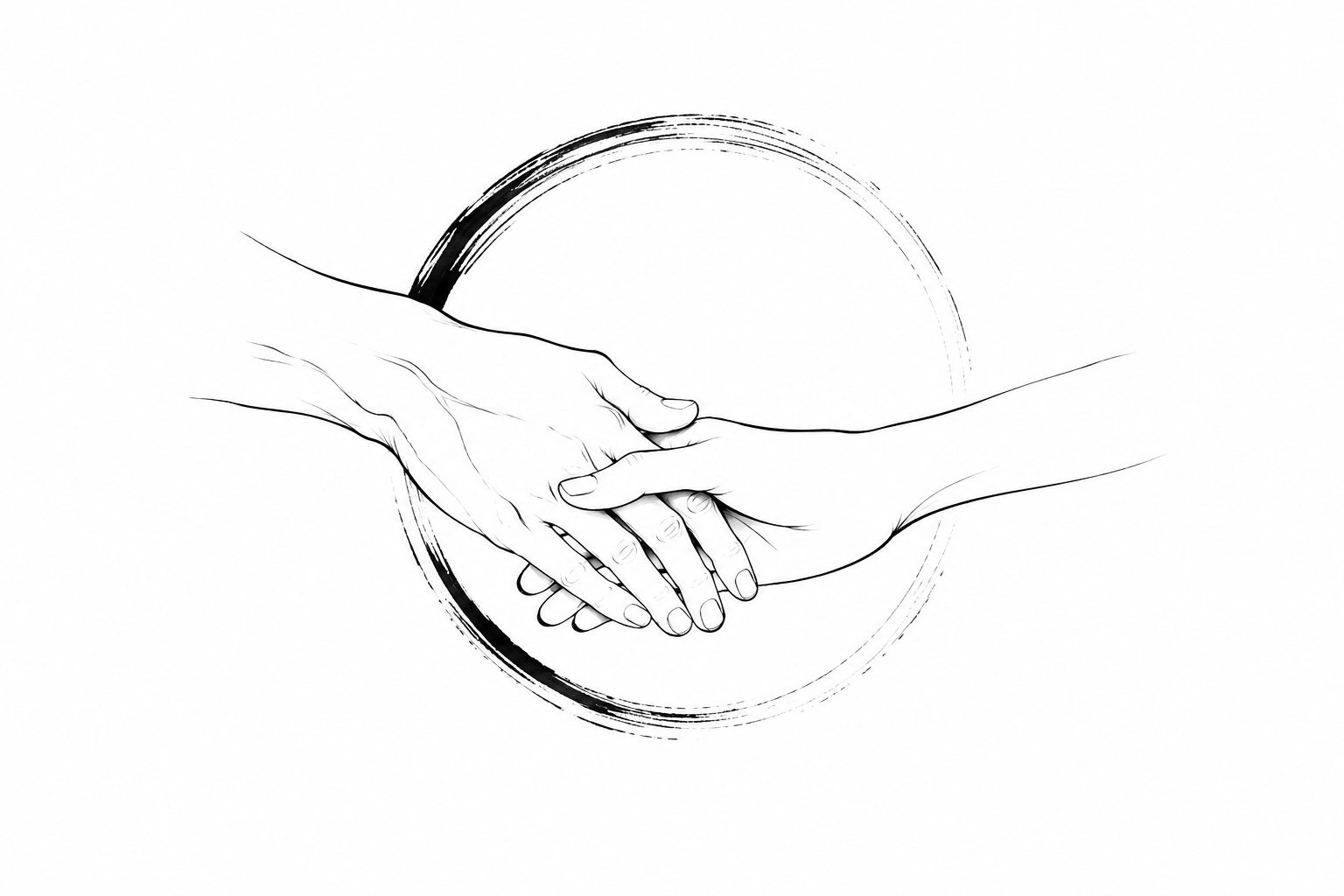
There is a word used so often in spiritual circles that sometimes it almost loses its meaning: Namaste.
For me, its essence has always been incredibly simple.
I honour the part of you that is divine.
That became one of the deepest foundations of my work.
People came to me carrying extraordinary amounts of shame. Shame about their bodies, their desires, their erections or their inability to have one. Shame about ejaculating too quickly, not being able to orgasm, their fantasies, their age, their weight, their scars, their loneliness. Sometimes simply the shame of wanting to be touched.
Over time, I learned that one of the most powerful things I could offer another human being wasn’t a technique. It was the experience of not being judged.
Of course boundaries matter. Respect matters. Hygiene matters. Consent matters enormously. But beneath all of that, there was another practice happening inside me.
Could I genuinely meet the person in front of me? Could I go beyond the immediate reactions of my own mind?
Because the mind judges constantly. Attractive. Unattractive. Too old. Too young. Strange. Difficult.
Beautiful. Awkward. Intelligent. Needy.
The deeper practice for me became noticing those barriers and moving beyond them to find the human being underneath.
Every person I allowed into my space became part of that practice. They weren’t perfect and neither was I. But I wanted people to experience something many of us rarely experience in ordinary life: to be seen without being despised, vulnerable without being mocked, touched without being used, and sexual without being shamed.
That taught me more about Tantra than many of the things carrying the Tantra label ever did.
It also brought enormous joy into my life.
This work allowed me to support my children, my grandmother, my brothers and other people I loved.
There was something deeply meaningful about that for me. Perhaps because a part of me had grown up feeling that nobody was really there for me, I found enormous purpose in becoming someone who could be there for others.
This is why I can no longer separate my understanding of Tantra from my own life.
I’m not talking about intimacy from an external perspective.
I know what it is to run away from love. I know what it is to confuse being desired with being loved. I know what it is to feel ashamed of my body and slowly find my way back into it. I know what it is to be a mother and a sensual woman at the same time. I know what it is to disconnect from myself and then spend years learning how to listen to my body again.
So when I hear Tantra reduced purely to sexuality, something in me resists. And when I hear sexuality almost erased from Tantra in an attempt to make the tradition more spiritually respectable, something in me resists that too.
My experience lives somewhere between those worlds.
Taoism eventually gave me a language that made enormous sense to me. Sexual energy didn’t have to be worshipped or feared. It is energy. Life-force. Something we can cultivate, circulate and learn from.
Today, I am much more interested in what sexuality reveals about us than in how “tantric” an experience appears from the outside.
Can you stay inside your body when somebody touches you?
Can you receive without performing?
Can you tell somebody what you want?
Can you hear a no without experiencing it as rejection?
Can you love someone without possessing them?
Can you remain present when shame appears?
Can you allow pleasure without needing to chase an orgasm?
Can you meet another person’s naked body without immediately turning them into an object?
These questions feel much closer to my understanding of Tantra now.
Because after all these years, Tantra has actually become much simpler for me.
Tantra is union.
It is the gradual dissolving of the illusion that I am completely separate from you, from nature, from the world and from life itself.
It is the ability to recognise something of ourselves in another human being, even when they look different from us, live differently, love differently or carry wounds we don’t understand. It is looking beyond the surface and recognising the same humanity, the same longing to love and be loved, the same life moving through another person that moves through us.
And this is where, for me, compassion becomes the real practice of Tantra.
Tantra, at its core, is union the gradual dissolving of the illusion that we are separate from one another, from nature, and from life itself. It is the recognition that within every human being lives the same longing
to love and be loved, the same vital energy that animates us all. This is where compassion becomes the real practice of Tantra.
When our hearts expand beyond personal preferences and judgements, we begin to see ourselves reflected in others. The boundaries between self and other soften, and the humanity we witness in another reminds
us of our own.
In this way, compassion opens the door to true union allowing us to remain fully ourselves while also belonging to the same life that flows through everything so our preferences, our judgements and our ideas about who is worthy of love, the boundaries between me and you begin to soften.
We begin to see ourselves in others.
What I reject in another person may be asking me to look at something within myself. What I honour in another may awaken something that was already living within me. Their vulnerability can remind me of mine. Their longing can remind me of mine. Their humanity can return me to my own.
This is the oneness that interests me.
Not the idea that we somehow lose our individuality or our boundaries. Quite the opposite. I think we can remain completely ourselves while recognising that underneath all these separate identities, bodies, histories and experiences, we belong to the same life.
For me, this is the deepest expression of Tantra.
It reaches far beyond what happens between two bodies. It is what happens when we stop experiencing the world entirely through separation. When judgement begins to make room for compassion. When fear makes room for curiosity. When another human being stops being simply the other and we recognise something of ourselves looking back.
Perhaps this is why I no longer feel a great need to defend the word Tantra.
I don’t know whether the purists would consider everything I have practised to be Tantra. I don’t know whether the neo-Tantra world would find my approach liberated enough.
Increasingly, I don’t think it matters.
My work has been profoundly influenced by Tantra and Taoism. It’s also shaped by my personal story around sexuality, motherhood, relationships, heartbreak and the people who’ve trusted me with their bodies and stories. Furthermore, my ongoing journey to understand intimacy has all played a part.
For me, Tantra is neither an escape from the body nor an obsession with it.
It is a way of coming home to ourselves deeply enough that we begin to recognise ourselves in each other.
The body remembers our wounds, yes.
But I have come to believe it remembers something else too.
It remembers the way home.




![Michael_Whiteman_Tantric_massage_Cardiff_Wales[1]](https://tantralink.com/wp-content/uploads/2026/04/Michael_Whiteman_Tantric_massage_Cardiff_Wales1.webp "The gift hidden inside the pain 6")